Flat Roofs in Bristol - Why So Many Fail, and How We Fix Them
Flat roofs are definitely one of the most common call-outs that we receive as a business in Bristol. The funny thing is, most failures aren't due to age, they're to do with poor design and lazy installations. Being near the cost, Bristol's weather reveals weaknesses in flat roofs very quickly, whether it's from the heavy rain, strong wind, or temperature variations.
The reason flat roofs fail
Poor drainage & constant standing water issues
Flat roofs aren't supposed to be 100% flat, they need the correct falls to avoid standing water and promote drainage. The issue with standing water is the acceleration in membrane degradation. Seemingly small issues like this will reliably turn into bigger problems like leaks and water damage.
Low-quality materials
A lot of roofers will focus on profit margins, not on longevity and total lifespan. Low-quality materials like thin membranes will quickly split under small amounts of UV exposure or slightly cold weather. There are also numerous older systems that work out cheaper for the installer, but inevitably lead to long-term issues and costs.
Poor installation is the main issue
If materials aren't the problem, it's the installation. There is a long process that needs to be followed to a T, otherwise it will result in numerous issues from leaks to the roof falling down! Here is a general overview of what the installation process SHOULD look like for a typical flat roof (there are multiple types of flat roofs, so installation guidelines may vary).
1. Adequate Preparation for the Roof Deck
- The existing deck needs to be completely solid, dry, and structurally secure
- Any and all rotten or damaged boards must be replaced, not covered or re-used
- The roof deck surface must be clean and even before proceeding
2. Ensuring Correct Falls are in Place
- No flat roof should ever be completely flat
- Falls are created to direct water towards outlets or gutters for drainage
- This minimises standing water, which is the number one cause for early failure
3. Good Quality Waterproof Membrane System
- The relevant flat-roof system is chosen depending on the roof and exposure
- Membranes should be laid evenly to avoid stretching and potential weak points
- The layers are installed in the specified order to ensure full protection
4. Seams and Joins
- The joints are typically the most unsafe areas
- They must be properly bonded or sealed
- Weak joins are where looks come from on badly installed flat roofs
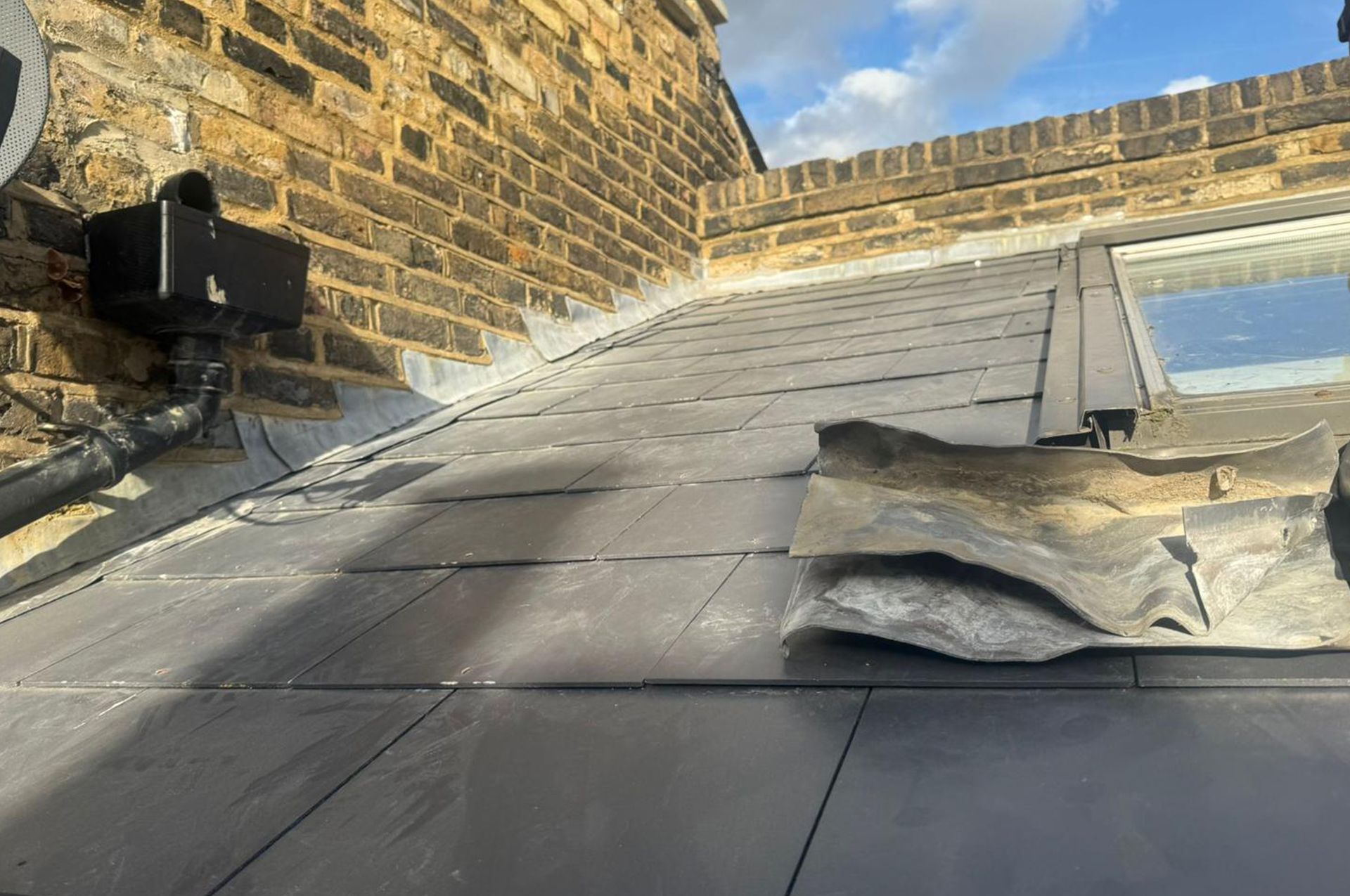
5. Adequate Flashings and Edging
- Flashing must be tidy and secure
- Roof edges, up stands, and entry points need a lot of attention
- This is where many general builders cut corners
6. Final Checks and Finishing
- Drainage tests before handover
- Edges, trims, and seals triple checked
- The roof should be left watertight and clean
Maintenance is Essential
Sometimes workmanship and materials aren't the issue - maintenance is. If your gutters or outlets remain blocked for an extended period, or small cracks develop, this can lead to full failure of the entire roof. Small maintenance routines like gutter cleaning are essential.
How To Detect Flat Roof Failure
If you can see water pooling on the roof for more than a few hours after lots of rain.
If you spot small cracks or blisters in the surface (interior or exterior).
If you spot damp patches or mould inside the property.
If the edges of the roof are lifting.
If there is a visible leak.
Our Flat Roof Repair Process
Our assessment
The team will inspect the integrity of the structure, the drainage system, and materials used for the roof. Next, the aim is to identify the real cause, not just assess the obvious symptoms. This will then lead to a decision on whether a repair is possible, or if a replacement is needed.
Drainage is the priority
The team will usually look to rebuild or modify the falls to ensure the best possible water run-off. Furthermore, upgraded outlets and drainage are also commonly required. Overall, this helps massively in preventing standing water.
Flat roof installation
With durable and weatherproof materials designed for weather conditions like we experience in Bristol, the team will install a system designed for long-term durability. This involves strong seams, detailing around the entire roof, no weak spots, and sturdy edging.
For the workmanship, it's essential to employ experienced flat roofing specialists, where attention to detail for the edges and drainage are a given. Clean and tidy finishes are also essential.
Why Proper Installation Makes a Big Difference
With good materials and reliable craftsmanship, a long lifespan is guaranteed. It's the drainage that makes a massive difference, if that is installed properly and with high-quality materials, you can easily reduce wear and promote much better durability. It's important to use modern systems rather than older felt-roof styles.
The Solution
If your flat roof is failing or showing signs of failure, contact our local team below for free advice or to arrange an assessment. Honest feedback is essential for you to understand the core problem and to make an informed decision regarding potential fixes. If you take action now, you could save yourself a lot of issues and money further down the line.
Ready to work with Bristol Roofing Pros?
Let's connect! We’re here to help.
Send us a message and we’ll be in touch.
Or give us a call today at 0117 427 8978
Agency Contact Form
More Marketing Tips, Tricks & Tools